

Real Estate
AML for Real Estate Brokers: A Must-Have Skill in Today’s Property Industry
AML training for brokers helps real estate professionals understand compliance requirements, regulatory obligations, and best practices in Dubai.
TrainPoint Institute · August 5, 2026 · 3 min read
Tags: AML Training for Real Estate
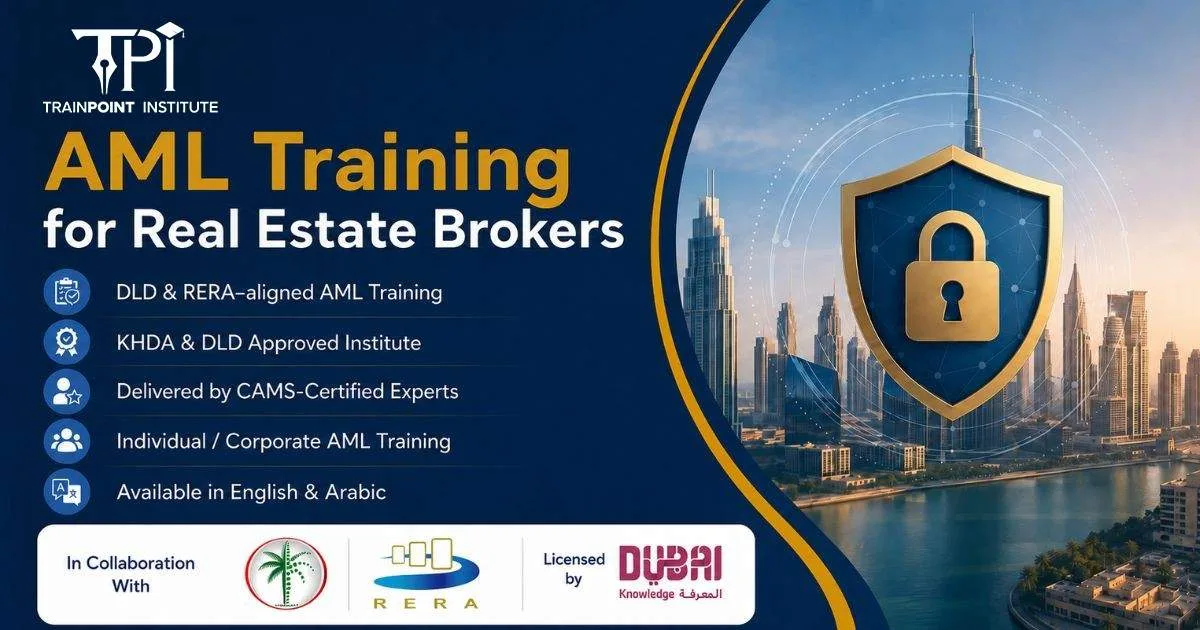
AML training for real estate brokers
The UAE real estate sector attracts global investors, making compliance and transparency more important than ever. AML training for brokers is essential, as real estate professionals are often the first to identify and report suspicious transactions and potential risks.
Understanding AML training for brokers is now essential. Regulators require brokers to follow strict compliance procedures to protect the market from financial crime. Whether you are new or experienced, strong knowledge of Anti-Money Laundering regulations can enhance your career and build client trust.
Why AML Compliance Matters for Real Estate Brokers
The UAE has established comprehensive regulations to combat money laundering and terrorist financing. High-value real estate transactions can attract individuals attempting to conceal illegal funds.
By completing AML training for brokers, professionals can:
Identify suspicious transactions.
Conduct customer due diligence.
Verify client identities.
Maintain proper records.
Report unusual activities.
Protect their brokerage reputation.
In Dubai’s competitive market, compliance knowledge distinguishes brokers from their peers.
Real estate brokers in Dubai regularly manage high-value transactions, which subject them to AML compliance checks by DLD and RERA. Our AML training equips brokers with practical guidance on KYC, red-flag identification, and reporting obligations, using scenarios specific to the UAE property market.
UAE Real Estate Market and AML Requirements
The UAE property sector is among the strongest in the region. Recent reports show Dubai records significant annual transaction volumes, with international investors contributing a substantial share.
As transaction volumes grow, regulators are strengthening AML frameworks to maintain market integrity.
Anti-Money Laundering training helps brokers stay compliant and avoid penalties.
Key Compliance Areas for Brokers
Compliance Requirement | Purpose |
|---|---|
Requirement Purposemer Due Diligence (CDD) | Verify client identity |
Know Your Customer (KYC) | Understand customer background |
Risk Assessment | Identify high-risk clients |
Transaction Monitoring | Detect suspicious activities |
Record Keeping | Maintain regulatory compliance |
Suspicious Activity Reporting | Report unusual transactions |
Anti-Money Laundering training helps brokers stay compliant and avoid penalties.
Benefits of AML Training for Real Estate Brokers
Real estate professionals are now enrolling in AML training for brokers to meet regulatory expectations and advance their careers.
1. Better Career Opportunities
Knowledge of AML training for brokers demonstrates professionalism and industry awareness.
2. Increased Client Confidence
Clients prefer brokers who follow compliance procedures and maintain transparent business practices.
3. Reduced Legal Risks
AML violations can result in significant fines and reputational harm. Proper training clarifies brokers’ responsibilities.
4. Professional Growth
Compliance knowledge creates opportunities for specialized roles in risk management, compliance, and regulatory advisory.
What You Learn in AML Training
A quality Anti-Money Laundering training program typically covers:
UAE AML regulations
Customer verification procedures
Risk-based approach
Beneficial ownership identification
Suspicious transaction reporting
Sanctions screening
Compliance documentation
Real estate sector-specific AML requirements
Professionals pursuing Compliance, AML, and Regulatory Training Courses find these skills valuable throughout their careers.
Want to know when the next AML course starts? WhatsApp us for batch dates, fees, and complete course details.
Get course details on WhatsAppWhy AML Skills Are Growing in Demand in Dubai
Dubai’s property market continues to attract global investors, increasing demand for compliance-aware professionals. As regulatory expectations evolve, brokerages seek staff who understand AML obligations.
AML knowledge helps professionals stay ahead of industry changes and demonstrates a commitment to ethical business practices.
As regulations become more complex, brokers with AML expertise are likely to experience greater career stability and opportunities for advancement.
Choosing the Right AML Course
When choosing a training provider, consider:
UAE regulatory relevance
Industry-recognized certification
Real estate-specific case studies
Practical compliance exercises
Updated legal content
Flexible learning options
The best Compliance, AML, and Regulatory Training Courses offer both theoretical knowledge and practical application.
As the UAE property sector grows, understanding AML training for brokers is now a core professional requirement. Proper training helps brokers protect themselves, their clients, and the wider real estate market.
Whether you are new to the industry or seeking advancement, investing in AML training for brokers strengthens compliance knowledge, enhances professional credibility, and supports long-term success in the evolving real estate sector.
Corporate AML training
Corporate AML training for brokers helps real estate brokerages and firms strengthen compliance across their teams. It is designed for brokers, sales agents, managers, and support staff. It provides a practical understanding of Anti-Money Laundering rules, customer due diligence, KYC procedures, risk assessment, and reporting suspicious transactions.
Training employees together helps real estate firms build a consistent compliance culture, reduce regulatory risk, improve operations, and ensure everyone understands their role in property transactions. Corporate AML training also helps firms meet regulations and build trust with clients, investors, and business partners.
Planning to enroll yourself or your real estate team? Contact us for fees and details on the next AML course batch.
Contact UsFAQs
Q1. What is AML training for brokers?
AML training for brokers means following specific processes and rules to help real estate brokers prevent money laundering and detect suspicious financial activity in property deals.
Q2. Why is AML training important for real estate brokers?
AML training teaches brokers how to spot suspicious transactions, comply with UAE regulations, reduce legal risks, and maintain a strong professional reputation.
Q3. Who should take AML training for real estate brokers?
Anyone involved in property deals, such as brokers, consultants, sales agents, managers, and compliance officers, should consider taking AML training.
Q4. What topics are covered in Anti-Money Laundering Training?
Most courses cover KYC procedures, customer checks, risk assessment, transaction monitoring, sanctions screening, reporting requirements, and UAE AML laws.
Q5. Are Compliance, AML & Regulatory Training Courses mandatory in the UAE?
Whether you need AML compliance training depends on your job and your company’s rules. You may need it to meet legal and industry standards.
Q6. How does AML knowledge help a real estate career?
Knowing about AML can boost your reputation, help you get jobs, support your compliance duties, and open new roles in compliance and risk management.
Q7. What are the benefits of AML training for real estate brokers in Dubai?
With AML training, professionals learn practical compliance skills, understand regulator expectations, build client trust, and improve their career prospects in Dubai’s growing real estate market.
Q8. How often should brokers update their AML knowledge?
Because rules change often, brokers should take refresher courses periodically and stay up to date on the latest compliance updates.
Related Posts:
MLRO certification in Dubai for compliance leadership
Train Point Institute Delivers AML & CFT Compliance Training to Empro Properties
Strengthening Compliance Awareness at MSK Real Estate Brokers LLC
← All articles · Contact the team
Related articles
-
 Real Estate
Benefits of Real Estate Training Course in Dubai
A Real Estate Training Course in Dubai is your first step toward becoming a certified and successful real estate professional.
-
 Real Estate
AML Training for Employees: Why Every Organization Needs It Today
AML training for employees in Dubai. Empower your team with essential skills to detect risks and meet UAE AML/CFT standards.
-
 Real Estate
How to Choose the Right AML Course in Dubai
Join the best AML course in Dubai to boost your compliance career. Get certified with expert-led Anti-Money Laundering courses in Dubai, UAE.