

TrainPoint Institute News
Corporate Excel Training: Building Data-Driven Teams
Build data-driven teams with corporate Excel training in Dubai that improves productivity, reporting accuracy, and business decision-making.
TrainPoint Institute · August 22, 2026 · 3 min read
Tags: corporate training, corporate excel training
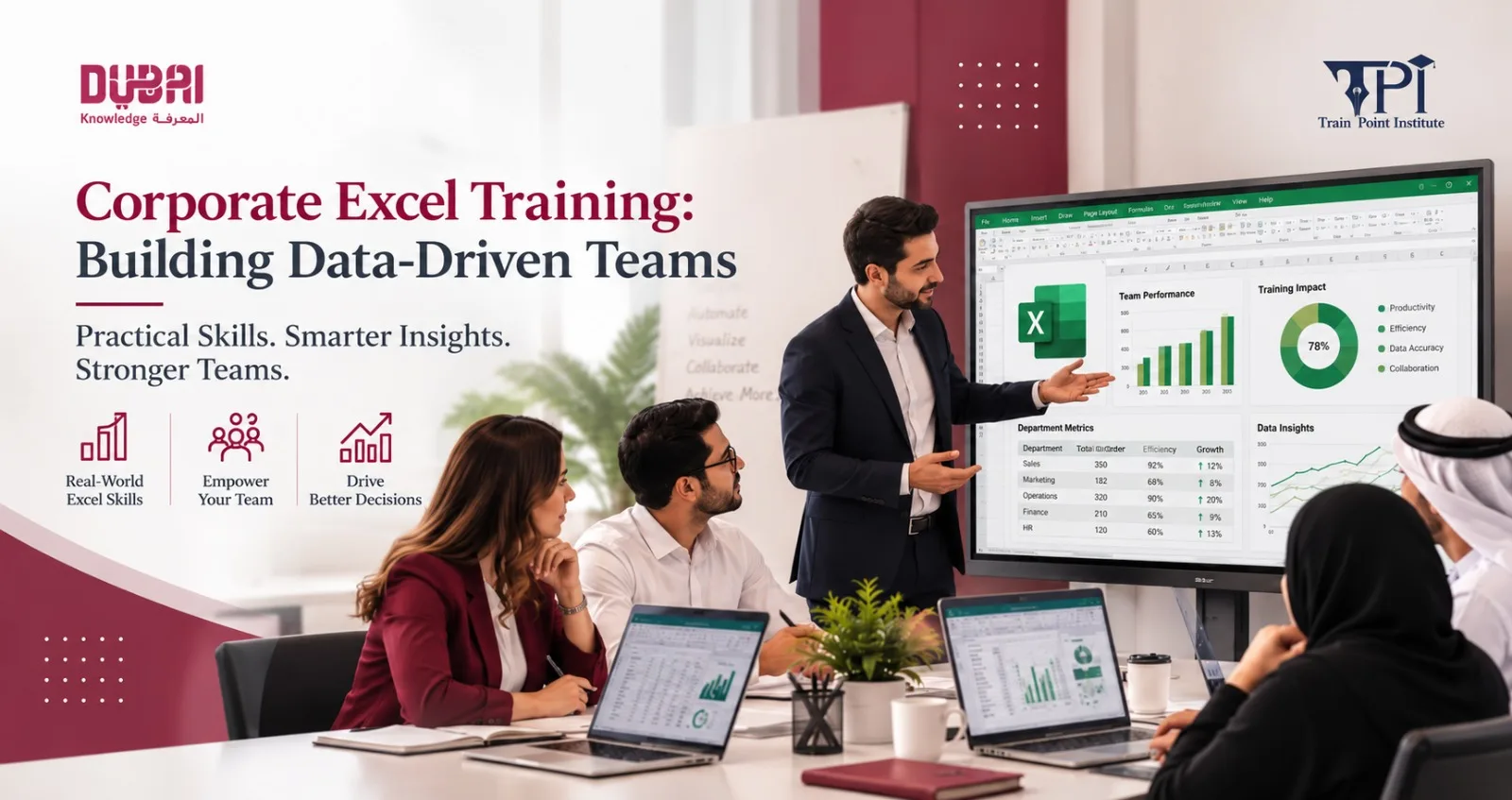
MS Excel corporate training
Microsoft Excel is one of the most essential workplace tools across finance, operations, human resources, sales, and strategy. Although most professionals use Excel daily, many organizations don't use its advanced features. This is where Corporate Excel training becomes a strategic investment, not just a basic skills upgrade.
Organizations need teams that can analyze data effectively, automate reporting, and make decisions faster. Structured advanced training bridges the gap between basic use and real business value, helping teams work smarter, faster, and more accurately.
Why Excel Proficiency Is a Business-Critical Skill
Excel is not only spreadsheets and formulas. It assists in financial modeling, forecasting, dashboards, scenario analysis, and operational reporting. The risks of lacking structured training include manual errors, inefficient workflows, and delayed insights.
Corporate Excel training is well-designed and based on real-world applications. The teams learn to use Excel in their job functions. This approach delivers short-term productivity gains and long-term skills.
Tailored Excel Skills Training for Teams
Generic courses don't always address role-specific challenges. Team training on the effective use of Excel is tailored to industry, department, and level of experience. For example:
Financial teams focus on financial models, pivot tables, and scenario analysis.
Operations teams benefit from automation, data validation, and reporting dashboards.
Sales and marketing teams use Excel for performance tracking and forecasting.
This focused strategy ensures departmental efficiency and accuracy.
What Makes Corporate Excel Training Effective?
Corporate Excel training combines formal and practical training.
Practical activities with real data.
Progressive learning levels range from intermediate to advanced.
Case studies rather than scholarly examples.
Measure skill adoption through post-training assessments.
Companies that invest in formal learning report faster reporting, less reliance on manual systems, and greater analytical confidence among teams.
Excel Training for Organizations in Dubai
Business requirements in Dubai are unique; companies in this region must grow quickly, meet regulatory requirements, and compete. Consequently, employers are increasingly focusing on upskilling that can provide short-term business benefits.
Corporate Excel training helps organizations in Dubai improve internal reporting standards and financial transparency, enabling teams to support leadership with credible data insights. Excel skills directly impact operational excellence, whether in SMEs or large businesses.
Choosing the Best Excel Training for Corporate Teams
The choice of the Best Excel training for corporate teams cannot be made solely based on the course’s duration and cost. Key factors include:
Organizational workflow customization.
The trainers' real-world business expertise.
Correlation with performance and productivity objectives.
Post-training support and practical assessment.
A well-designed course ensures learning results not only in certificates but also in performance improvements.
Long-Term Business Impact
Corporate training delivers long-term ROI when done correctly. Teams become more independent, less reliant on outside consultants, and respond more quickly to management requests. In competitive markets such as Dubai, these benefits are directly linked to improved decision-making and financial control.
By consistently investing in Microsoft Excel skills, organizations build a culture of data-driven thinking, a prerequisite for sustainable growth.
Our Corporate Excel training for sales and marketing teams helps you track and analyze performance. Our courses cover sales data analysis, dashboard building, and Excel for marketing analytics. With these skills, teams can manage pipelines, forecasts, and KPIs more confidently.
FAQs
Q1. What is Corporate Excel training?
Corporate Excel training is formal learning that enhances teams’ Excel competence, with an emphasis on practical use in real business applications such as reporting, analysis, and automation.
Q2. Who should attend Excel skills training for teams?
Financial, accounting, operations, HR, sales, and management employees benefit most, especially those who work with data regularly.
Q3. What topics are covered in advanced corporate Excel training?
This data analytics-focused Excel training covers the most popular topics: pivot tables, advanced formulas, dashboards, data analysis, automation, and business reporting.
Q4. How do organizations choose the best Excel training for corporate teams?
The most effective courses are tailor-made, realistic, instructor-led, and focused on organizational goals rather than generic tutorials.
Q5. Is corporate Excel training suitable for companies in Dubai?
Yes. Many organizations in Dubai use Excel widely for financial reporting, compliance, and performance analysis, so structured training is highly valuable.
Book Team Excel training today to improve your company's overall productivity.
← All articles · Contact the team
Related articles
-
 TrainPoint Institute News
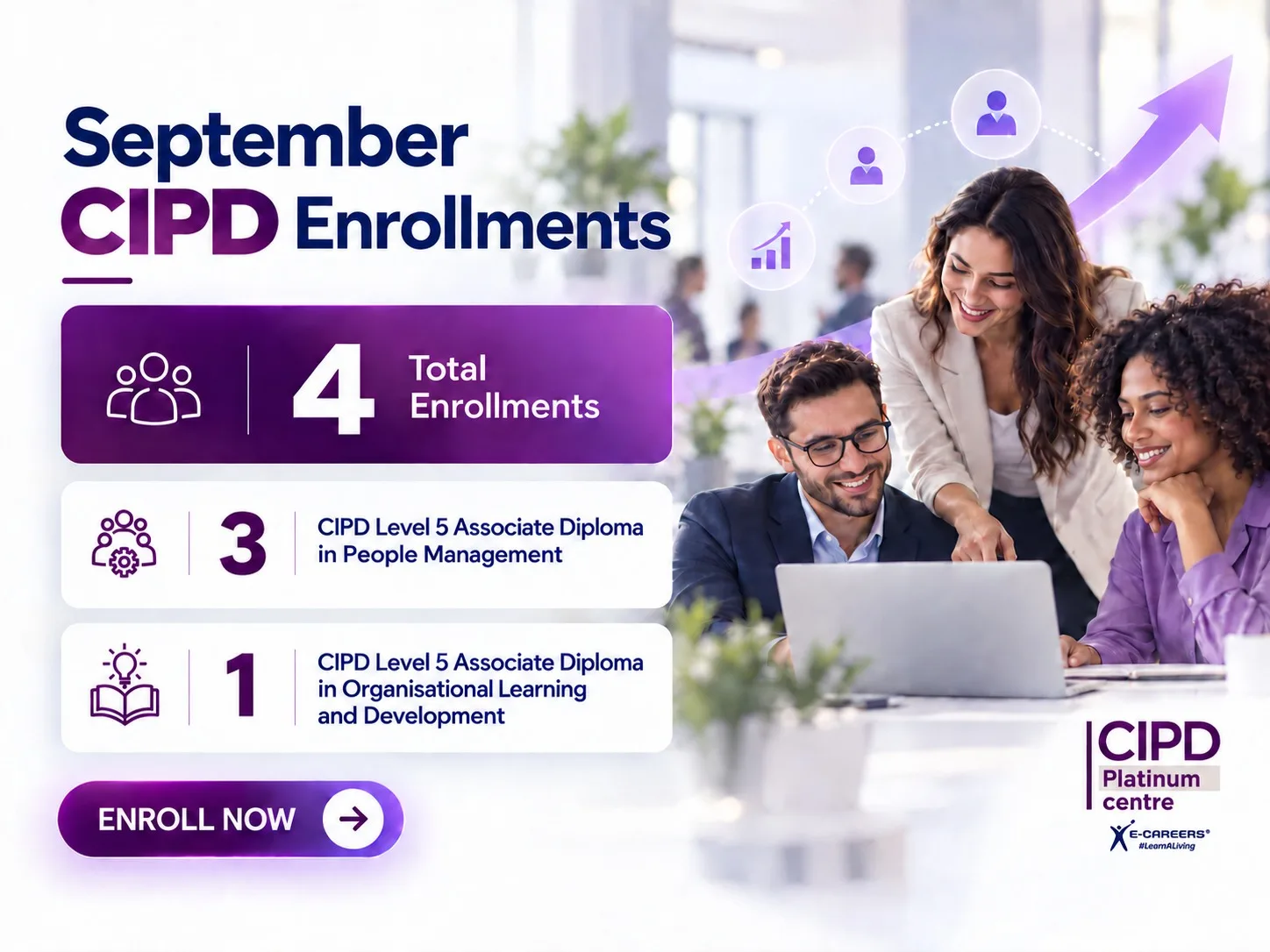
4 HR Professionals Chose CIPD Level 5 in September
Four professionals begin their CIPD journey: 3 choose People Management, and 1 chooses Organizational Learning & Development.
-
 TrainPoint Institute News
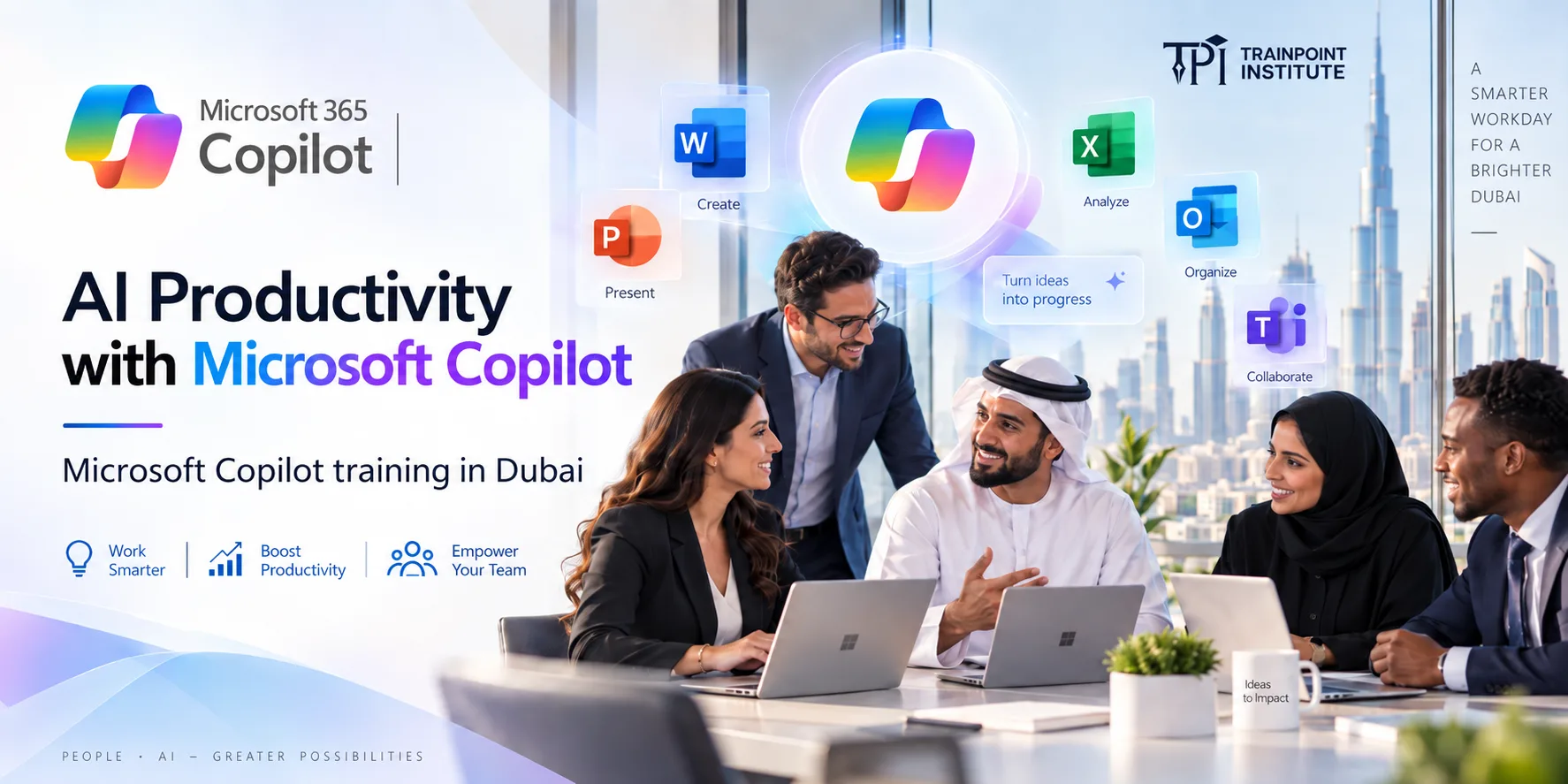
Boosting Corporate Productivity with Microsoft Copilot
Microsoft Copilot Training in Dubai helps corporate teams improve productivity, automate tasks, and use Copilot effectively across Microsoft 365.
-
 TrainPoint Institute News
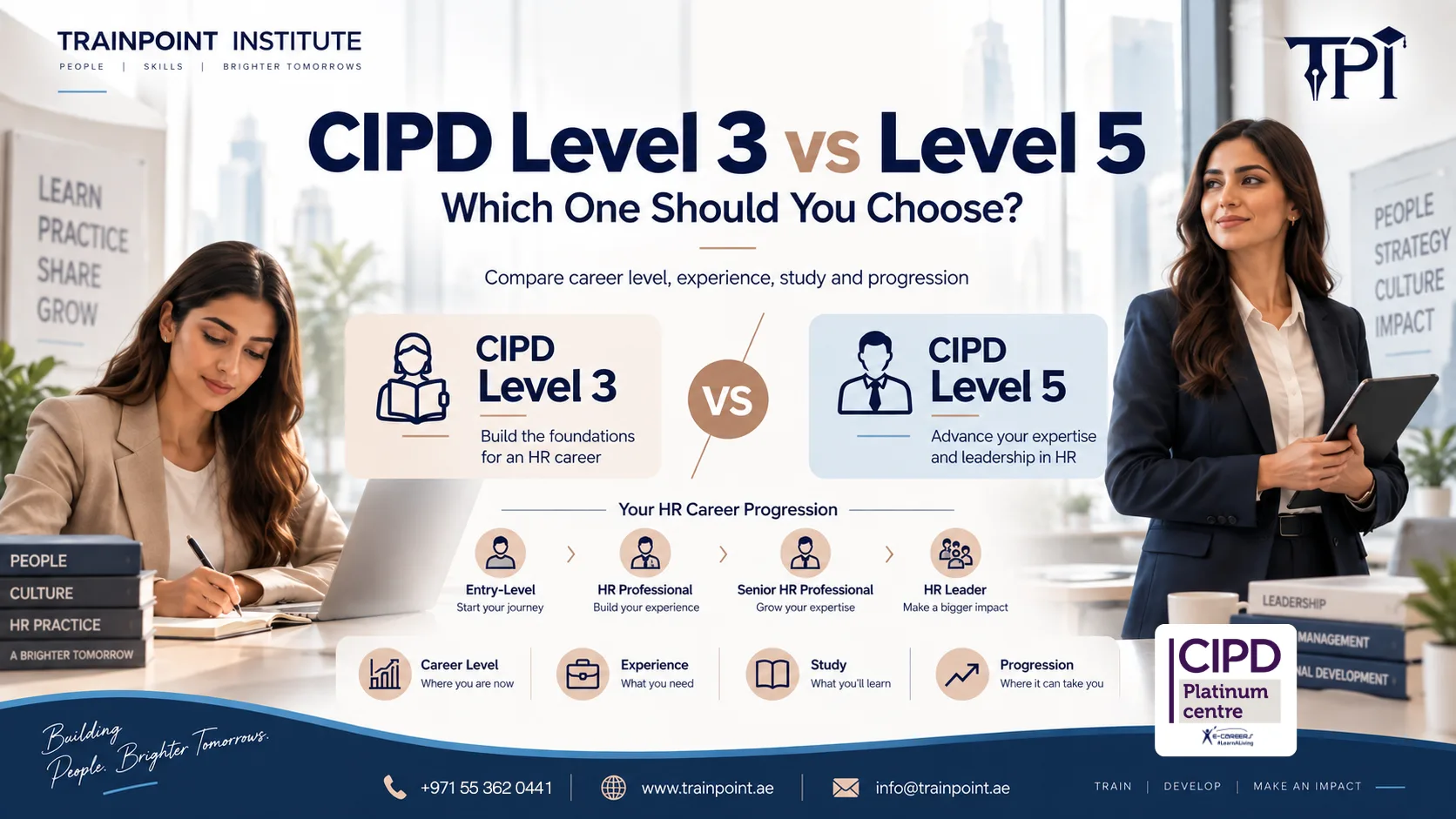
CIPD Level 3 vs Level 5: Which One Should You Choose?
Choosing between CIPD Level 3 and Level 5? Compare entry requirements, career goals, study depth, and membership outcomes to find the right HR qualification.